
Acrylic is a plastic material that has many purposes. It offers a cost-effective, durable material that can be turned into a variety of shapes and sizes, although acrylic sheets are the most popular form. This is because acrylic sheets can be turned into windows, retail displays, and even aquariums–all while providing better impact strength and a higher level of optical clarity than glass!
Key Takeaways
- Acrylic sheets are available in two main types — cast and extruded — each with distinct manufacturing processes and material properties.
- Cast acrylic offers superior chemical resistance, a wider range of thicknesses, and greater durability, making it suitable for large structures and custom installations.
- Cast sheets are produced through either batch cell or continuous casting, refined in an autoclave for clarity and strength, and often finished with sanding and buffing for a smooth or glossy surface.
- Extruded acrylic is more affordable, maintains consistent thickness, and is easier to machine and polish, making it a common choice for retail displays and everyday applications.
- Both types undergo strict quality control to ensure safety, clarity, and strength, and Acme Plastics offers a wide selection of cast and extruded acrylic sheets in various colors and sizes.
Interestingly, acrylic isn’t just a single form of plastic. It’s any type of plastic. It’s actually any type of plastic that contains derivatives of acrylic acid, but PMMA is by far the most common type of plastic. This is part of why multiple brands and varieties of acrylic plastic exist. Not only can acrylic plastic be chemically versatile, it can also be produced in two different ways: cast or extruded.
When seeking to purchase acrylic plastic, it can be both interesting and beneficial to discover how both kinds of acrylic sheets are made. To ensure the correct plastic is chosen, and satisfy any curiosity about the production process of our sheets, read on:
How Cast Acrylic Sheets Are Made
Cast acrylic has a high level of chemical-resistance, and can be formed into a variety of shapes, sizes, and colors. In its sheet form, cast acrylic is a great choice if a durable material is needed. Not only that, but cast provides a greater range of thicknesses, making it ideal for large structures and installations.
Cast acrylic is made using two main methods: batch cell, which is common for thick, made-to-order sheets, and continuous production, ideal for thin or narrow sheets. Both start by mixing a monomer with a catalyst to form a transparent polymer, with optional color or patterns added.
The molten plastic is poured into a custom mold, then cured in an autoclave under heat and pressure to remove bubbles and increase clarity. Sheets are then sanded and optionally buffed to a smooth or glossy finish before sale.
How Extruded Acrylic Sheets Are Made
Extruded acrylic has a different production process than cast acrylic, giving it different properties. Acrylic produced through this method is less expensive and has a more consistent thickness. It’s popular for building retail displays because it can be machined and polished much more easily than cast acrylic.
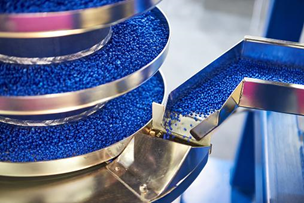
This process starts with extrusion-grade polymer pellets, made by suspending a monomer in water and adding a catalyst to form polymer droplets. The pellets are fed into an extruder, which heats them to a molten consistency. The molten plastic is then pressed through a metal die to form uniform sheets of varying thicknesses. Sheets pass through cooling rows to solidify, then are cut to size and finished with sanding and buffing.
Conclusion
No matter the matter of production of acrylic sheets, quality control is always the paramount concern. This isn’t just to prevent contamination, which can damage the integrity of the sheets. It’s done to prevent chemical reactions that can be unsafe to workers. This is primarily done by monitoring each step of the production process, including controlling temperatures from start to finish.
Acme Plastics is the expert in all things acrylic. We offer a range of acrylic sheets in a spectrum of colors, available in both cast and extruded. Visit our website if you’d like to see our full selection. If you have additional questions, contact us today.
