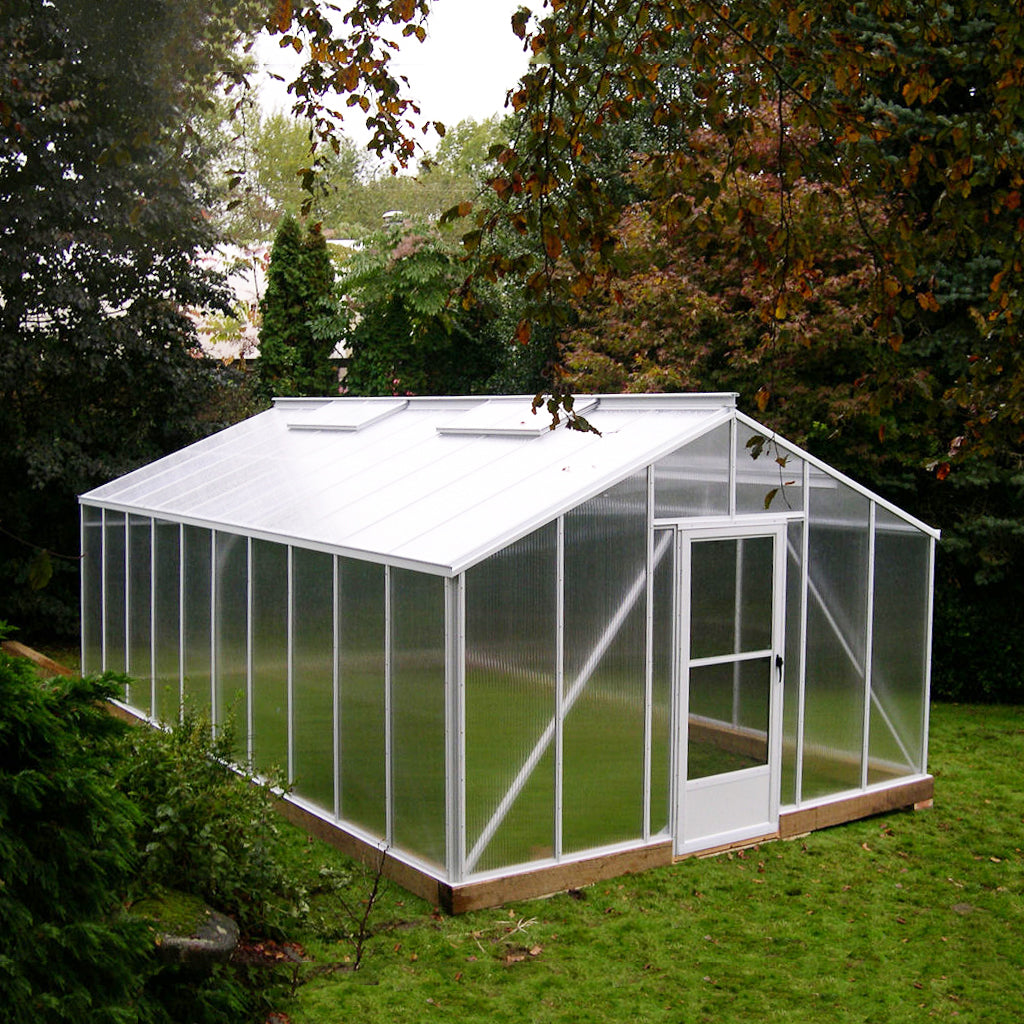
Why Twinwall Polycarbonate Greenhouse Panels Deliver More Predictable Growing Results

Twinwall polycarbonate green house

From trendy Victorian styles exuding old-world charm to Zen-inspired builds creating harmony with the environment to minimalist designs that deliver a functional simplicity, greenhouses are transforming into stunning architectural spaces. But at the end of the day, a greenhouse needs to be more than an aesthetic structure to yield successful plants. It needs to deliver environmental control to manage temperature swings and uneven light to counteract rising energy costs. The solution lies in the material used for the build. Twinwall polycarbonate greenhouse panels are a cost-effective solution as they have thermal insulation and diffuse light to create consistent, even conditions for plant growth. Compared to glass and acrylic, twinwall polycarbonate greenhouse panels will help achieve the consistency and efficiency a grower is looking for.

Key Takeaways

  • Greenhouse performance depends on material choice. Twinwall polycarbonate greenhouse panels outperform glass and single-wall plastics by delivering more consistent temperature control and light distribution.
  • Light diffusion matters more than clarity. Twinwall polycarbonate diffuses sunlight to eliminate hotspots and shadows, supporting healthier, more uniform plant growth and improved yields.
  • Superior thermal insulation reduces energy costs. With up to 60% better insulation than glass, twinwall polycarbonate helps retain heat in winter and resist overheating in summer, lowering heating and cooling expenses.
  • Built for durability and real-world conditions. Twinwall polycarbonate is impact-resistant, weather-tough, UV-protected, and far less prone to cracking, shattering, or degradation than glass.
  • Lower long-term costs beyond the panels themselves. Lightweight construction reduces shipping, labor, and framing requirements while making installation easier for DIY and commercial builds.
  • Flexible for custom greenhouse designs. Panels can be cut, drilled, cold-bent, and used with multiple framing materials, making them ideal for backyard, commercial, and research greenhouses.
  • Choosing the right thickness is critical. Panel thickness should align with climate, structure size, and usage—expert guidance helps ensure long-term performance and reliability.

Continue reading Why Twinwall Polycarbonate Greenhouse Panels Deliver More Predictable Growing Results

Twinwall Polycarbonate Panels for Spring Greenhouses and Pergolas

People stand before a greenhouse entrance filled with flowers.

Spring not only brings the perfect conditions to plant flowers, fruits, and vegetables. Its warmer temperatures and longer daylight hours provide optimal conditions for building or upgrading outdoor structures, such as greenhouses and pergolas, too. If you’re a homeowner, gardener, or contractor preparing greenhouses and pergolas for the upcoming growing season, you’ll need to consider your building materials. Choosing materials that balance light, durability, and insulation will be beneficial for plant growth. That’s where twinwall polycarbonate panels come in. They are a versatile solution for spring projects: they are translucent, have good thermal properties, and allow high light transmission for plants. Here, we discuss the material and why they are a superb choice for these Springtime builds.

Key Takeaways: Spring Is the Season to Build

  • Spring offers ideal building conditions for greenhouses, pergolas, and patio covers thanks to longer daylight hours and milder temperatures.
  • Twinwall polycarbonate panels are a smart material choice for spring builds, balancing high light transmission, durability, and thermal insulation.
  • The multi-wall design diffuses sunlight, reducing hotspots and promoting healthier, more consistent plant growth compared to glass or acrylic.
  • Built-in air pockets provide superior insulation, offering up to 60% more thermal efficiency than glass and helping maintain stable greenhouse temperatures.
  • Twinwall panels are impact- and weather-resistant, standing up to hail, wind, and temperature swings without shattering.
  • For pergolas and patio covers, twinwall panels deliver bright shade, allowing natural light while minimizing heat and glare.
  • UV-resistant coatings protect people, plants, and furnishings while preventing yellowing and material degradation over time.
  • Lightweight and easy to install, twinwall polycarbonate works with wood, aluminum, or steel framing—ideal for both DIY and professional builds.
  • Panel thickness matters: thinner panels suit backyard greenhouses, while thicker panels perform best for pergolas, sheds, and commercial structures.
  • Choosing a reliable supplier like Acme Plastics ensures quality, access to multiple thicknesses, cut-to-size options, and expert guidance for spring projects. Continue reading Twinwall Polycarbonate Panels for Spring Greenhouses and Pergolas

Why Polycarbonate Is The Right Roofing Material For A Greenhouse

Whether you are a hobbyist or a certified horticulturist, you rely on a greenhouse for year-round gardening. If you are building a new greenhouse or replacing any panels, you need to consider a greenhouse roof material that offers light transmission and heat properties. There are a variety of roofing materials—each with its own unique physical and aesthetic properties. What you ultimately choose depends on what type of structure you are putting a roof on. While metal might be the right material for a gardening shed, you wouldn’t want to use it on a greenhouse. You want a translucent material that provides thermal insulation as well as protection. Traditional materials for a greenhouse roof include glass, fiberglass, acrylic, and polycarbonate panels. Polycarbonate roofing panels, such as  twinwall and multiwall polycarbonate sheets, can be used as roofing panels and greenhouse panels. The panels are an ideal roofing material for greenhouses due to their lightweight properties, cost-effectiveness, and insulation capabilities.

Here, we go into more details on those properties, plus a few more reasons on why polycarbonate is a great greenhouse roof material.

Key Takeaways

  • Polycarbonate panels allow up to 90% of light to pass through, offering glass-like clarity while retaining heat 60% better than glass.
  • With 250 times the strength of glass, polycarbonate resists cracking, breaking, and damage from hail or debris, making it a highly durable greenhouse roofing option.
  • Polycarbonate provides up to 60% more thermal insulation than glass, helping reduce heat loss, lower energy costs, and create a stable environment for plants.
  • At half the weight of glass, polycarbonate panels are easier to ship, handle, and install, while also reducing stress on the greenhouse structure.
  • Acme Plastics offers standard twinwall and multiwall sheets, along with custom sizes and thicknesses to meet the specific needs of any greenhouse project.

Continue reading Why Polycarbonate Is The Right Roofing Material For A Greenhouse