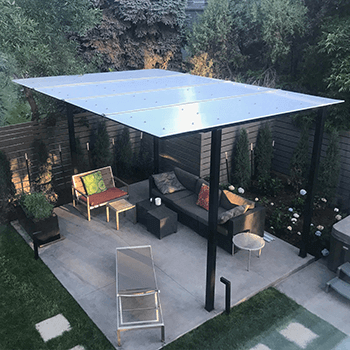
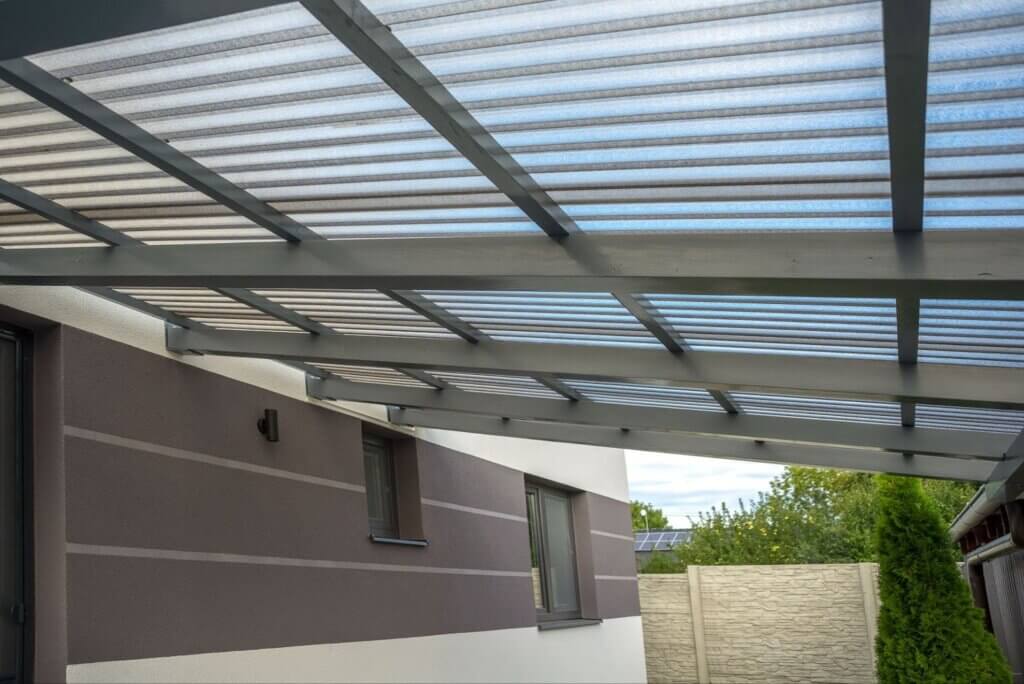
Whether you are a hobbyist or a certified horticulturist, you rely on a greenhouse for year-round gardening. If you are building a new greenhouse or replacing any panels, you need to consider a greenhouse roof material that offers light transmission and heat properties. There are a variety of roofing materials—each with its own unique physical and aesthetic properties. What you ultimately choose depends on what type of structure you are putting a roof on. While metal might be the right material for a gardening shed, you wouldn’t want to use it on a greenhouse. You want a translucent material that provides thermal insulation as well as protection. Traditional materials for a greenhouse roof include glass, fiberglass, acrylic, and polycarbonate panels. Polycarbonate roofing panels, such as twinwall and multiwall polycarbonate sheets, can be used as roofing panels and greenhouse panels. The panels are an ideal roofing material for greenhouses due to their lightweight properties, cost-effectiveness, and insulation capabilities.
Here, we go into more details on those properties, plus a few more reasons on why polycarbonate is a great greenhouse roof material.
Key Takeaways
- Polycarbonate panels allow up to 90% of light to pass through, offering glass-like clarity while retaining heat 60% better than glass.
- With 250 times the strength of glass, polycarbonate resists cracking, breaking, and damage from hail or debris, making it a highly durable greenhouse roofing option.
- Polycarbonate provides up to 60% more thermal insulation than glass, helping reduce heat loss, lower energy costs, and create a stable environment for plants.
- At half the weight of glass, polycarbonate panels are easier to ship, handle, and install, while also reducing stress on the greenhouse structure.
- Acme Plastics offers standard twinwall and multiwall sheets, along with custom sizes and thicknesses to meet the specific needs of any greenhouse project.
Continue reading Why Polycarbonate Is The Right Roofing Material For A Greenhouse